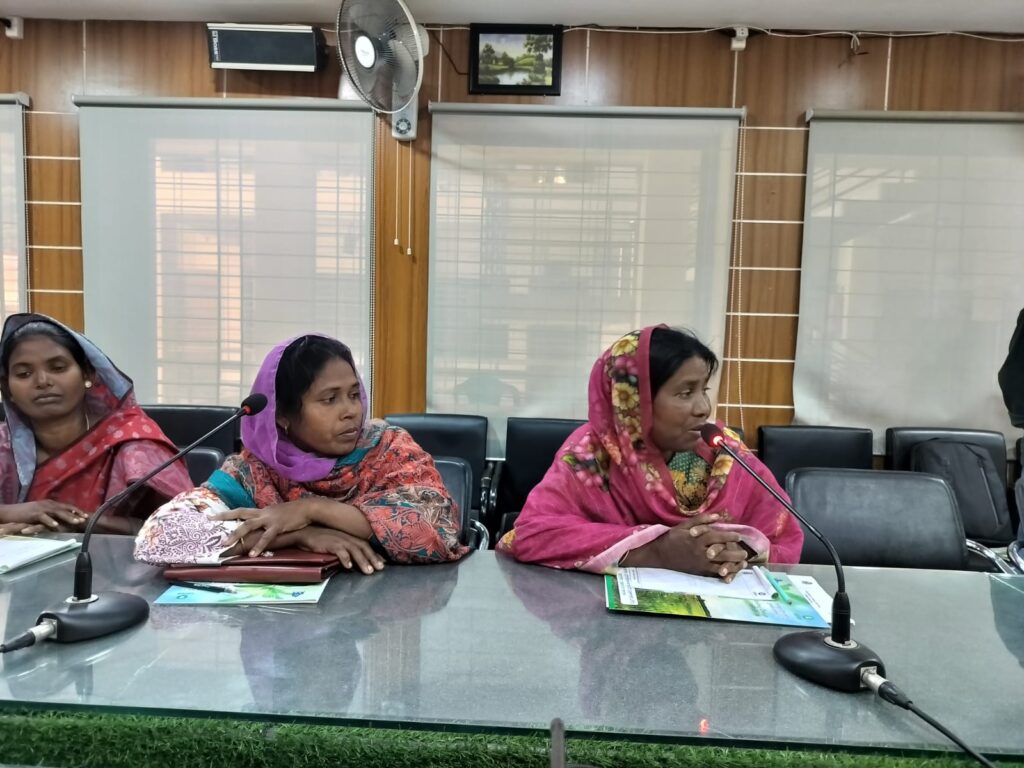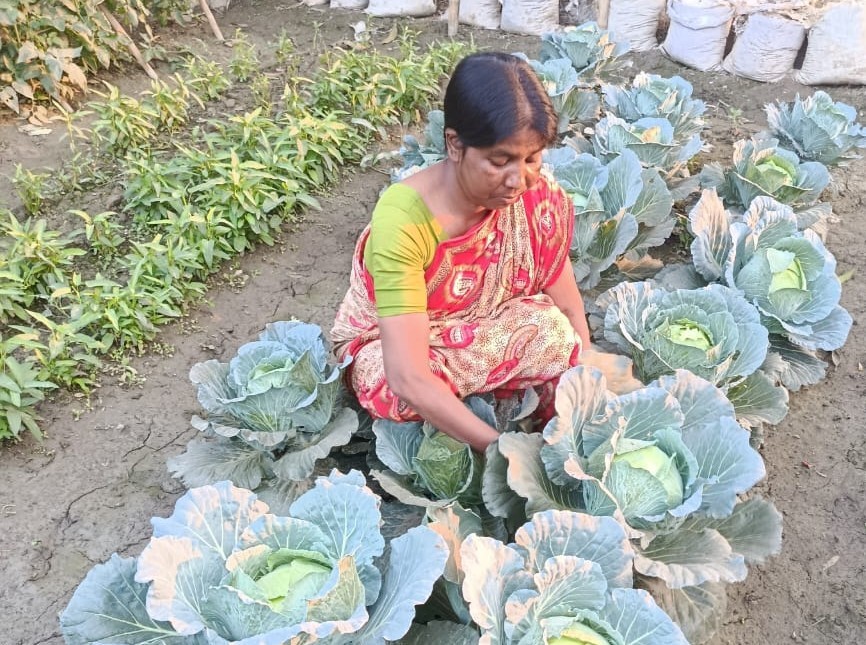
Once Agata Soren saw government authorities as duty bearers to her and other smallholder women, her relationship with the local agricultural institutions changed. She actively claimed her rights and inspired other women to follow. This is a story about inclusive governance.
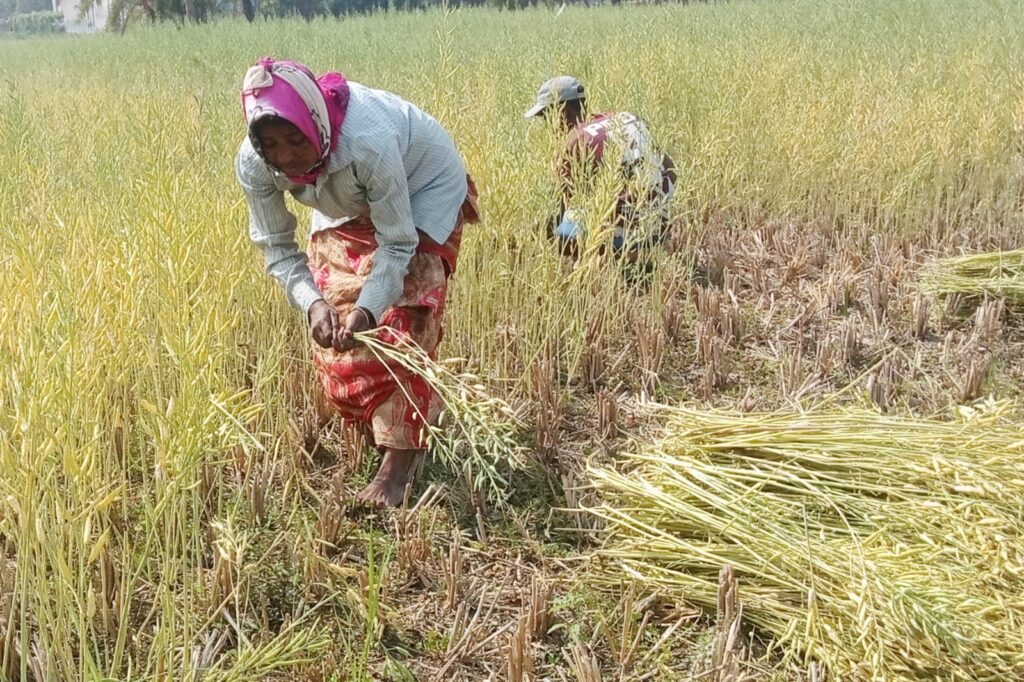
Agata Soren, is a Bangladeshi farmer and an indigenous Santal woman belonging to the largest ethnic minority in northern Bangladesh’s Rajshahi. She is also a member of the Nabaibattala Women’s Group in Deopara Union of Godagari Upazila. As an Indigenous woman in a rural setting, she faced long-standing social and institutional barriers that restricted her access to government support and decision-making spaces. This explains why she had limited interactions with the Upazila Agriculture Office little clarity on the public services available to women farmers.
Following her participation in agroecology and women’s leadership training in 2024, Agata strengthened her technical understanding, and awareness of her right to access public agricultural services. The cultivating Change program lead by Association for Community Development and Oxfam in Bangladesh, delivered trainings and discussion spaces that encouraged Agata to view government institutions not as distant authorities but as duty bearers, who are responsible for addressing the needs of women farmers, including Indigenous women traditionally excluded from such systems.
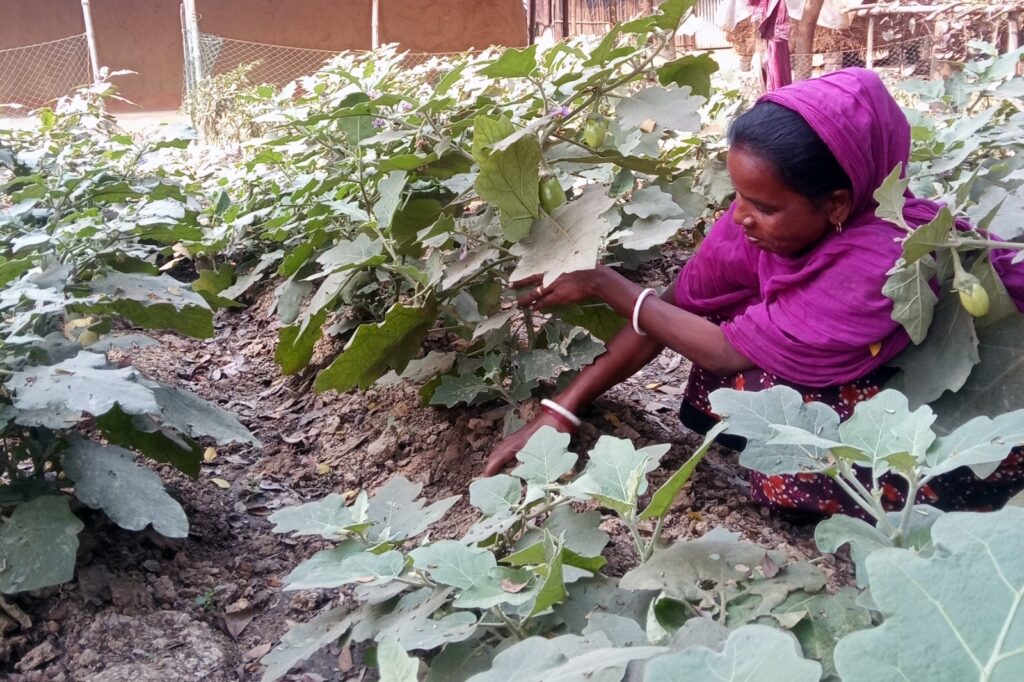
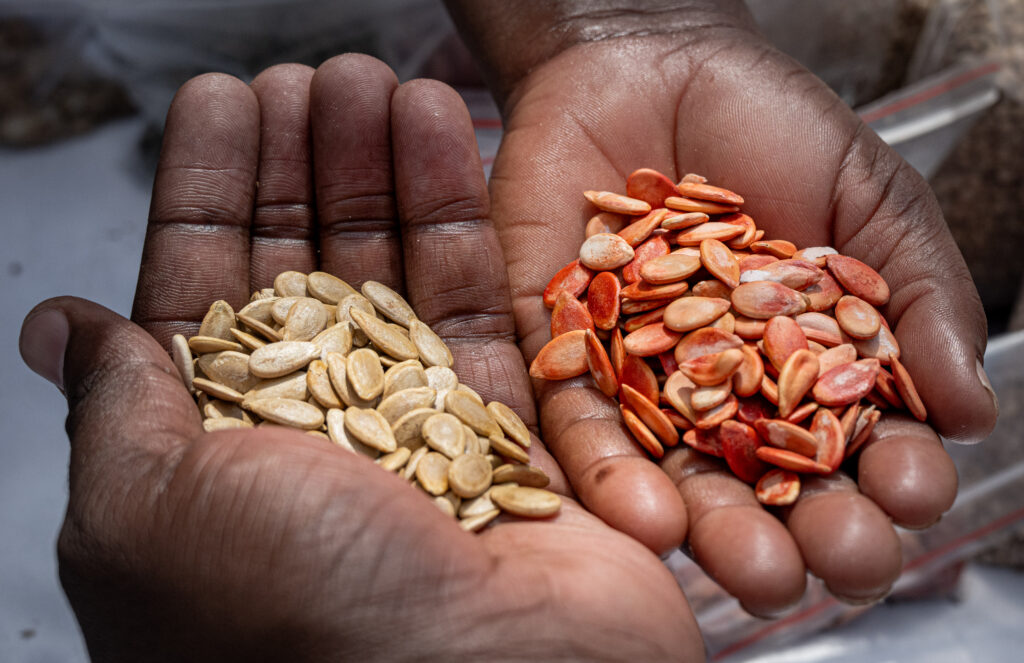
Motivated by this new perspective, Agata initiated communication with the Upazila Agriculture Office. With advocacy linkage support, she approached agriculture officials to seek technical guidance and inputs for homestead cultivation. As a result of this engagement, the Agriculture Office provided her with quality vegetable seeds, technical advice, and essential agricultural materials.
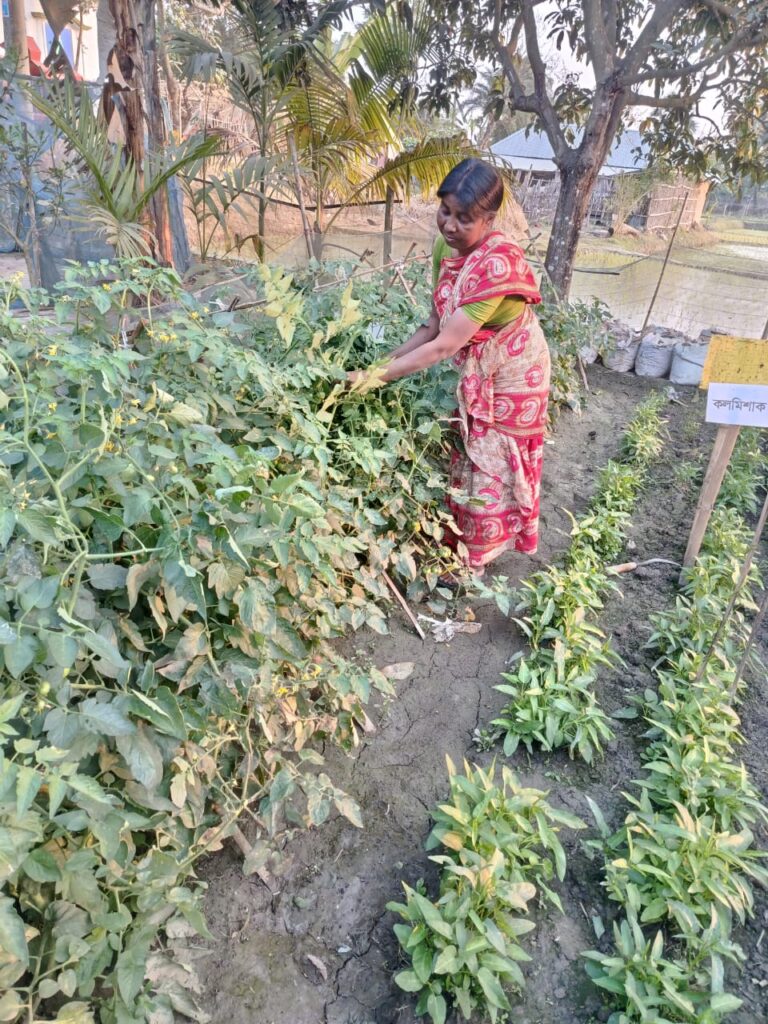
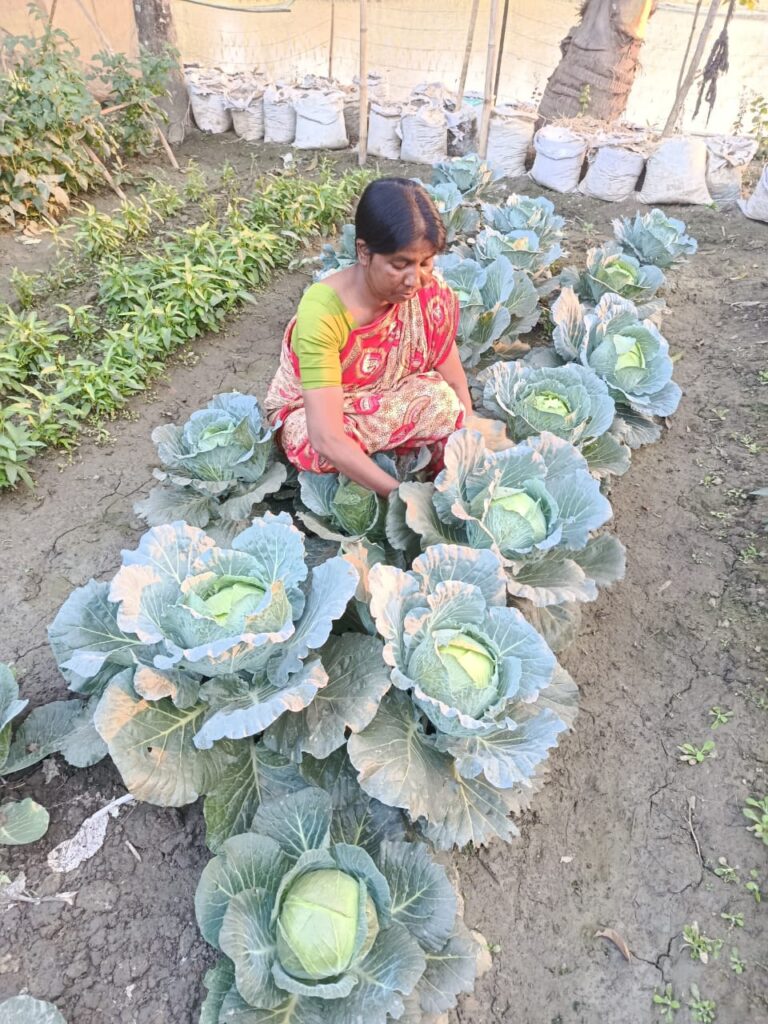
Agata began maintaining regular contact with agriculture officials, sharing progress from her homestead garden and seeking guidance when challenges arose. Over time, Agata’s homestead cultivation became a visible example of Indigenous women’s engagement with public services. Local agriculture officers visited her garden, and neighboring women increasingly approached her for information and encouragement. This helped normalize women’s, particularly Indigenous women’s, interaction with government institutions and strengthened collaboration between women’s groups and the Agriculture Department at the local level.
.
.
“My dream is to expand my homestead garden using eco-friendly methods and work closely with the Agriculture Office to inspire other women to produce safe food, so our community can become healthy, self-reliant, and food secure.”
.
.
Agata is deeply committed to her community, it is also thanks to the encouragement of other women and neighboring households that helped her sustain motivation and increased her visibility as a local example of an Indigenous woman successfully engaging with government institutions.
This outcome marks a profound power shift, as Agata breaks through the historical exclusion of Indigenous women to claim her rightful place in local governance. Her journey moves beyond simple capacity building toward a bold, proactive interaction with duty bearers. This engagement is also more than a personal success; it contributes to more inclusive engagement and showcases governance that is accountable to those it serves.