“I am now a self-reliant woman.” Olivia Biswas made use of the Cultivating Change programme to become an independent farmer who can provide for her family.
In Dingpara village of Rajshahi District, Olivia Biswas worked mainly as an agricultural wage laborer on other people’s land. The 35-year-old woman is part of an Indigenous community named ‘Paharia’, a minority group in Bangladesh. She is determined to provide for her family and to be an active member of her community.
The Paharia, meaning hill people, are a minority and marginalized group in Bangladesh, as such they face systemic discrimination that affects their education, work and housing opportunities. As an Indigenous woman in a marginalized rural setting, Olivia faces multiple layers of inequality. The intersection of these factors restricted her; it is impossible to make long-term plans on uncertain and unstable grounds. This kept Olivia and her family under long-standing difficult conditions, including insecure housing and limited access to productive resources.
The inequalities of the world system are reproduced in our food system, power and profit concentrates in the hands of a few while small‑scale farmers like Olivia bear the highest costs. Gender norms, discrimination, land grabs, poor labor conditions, unfavorable policies, exacerbated by climate change —continue to widen the gap between the powerful and people pushed to the margins.
Since September 2024, Olivia Biswas participated in trainings, meetings, and regular follow-up discussions offered by Association for Community Development under the Cultivating Change program. During this period, she explored climate-resilient agriculture, drought-tolerant crops, improved farming techniques, and livelihood diversification. Although she continued working as an agricultural laborer at that time, her engagement gradually strengthened her confidence and aspiration to move beyond wage-based labor.
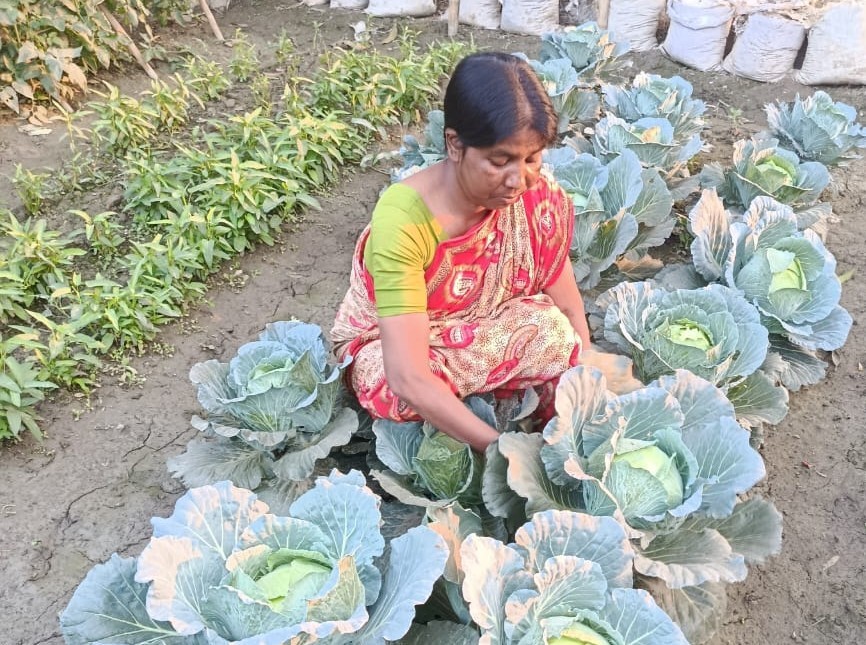
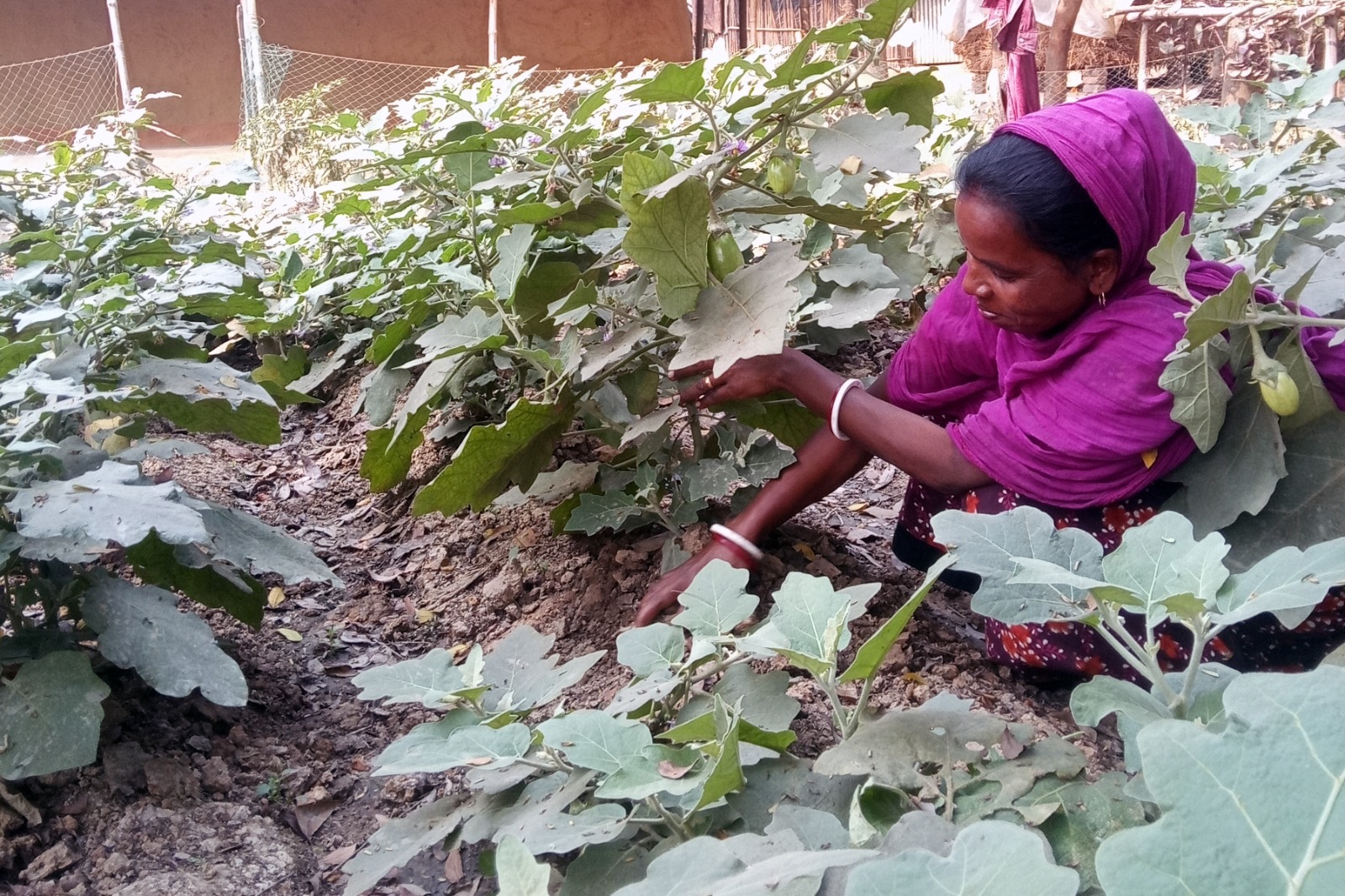
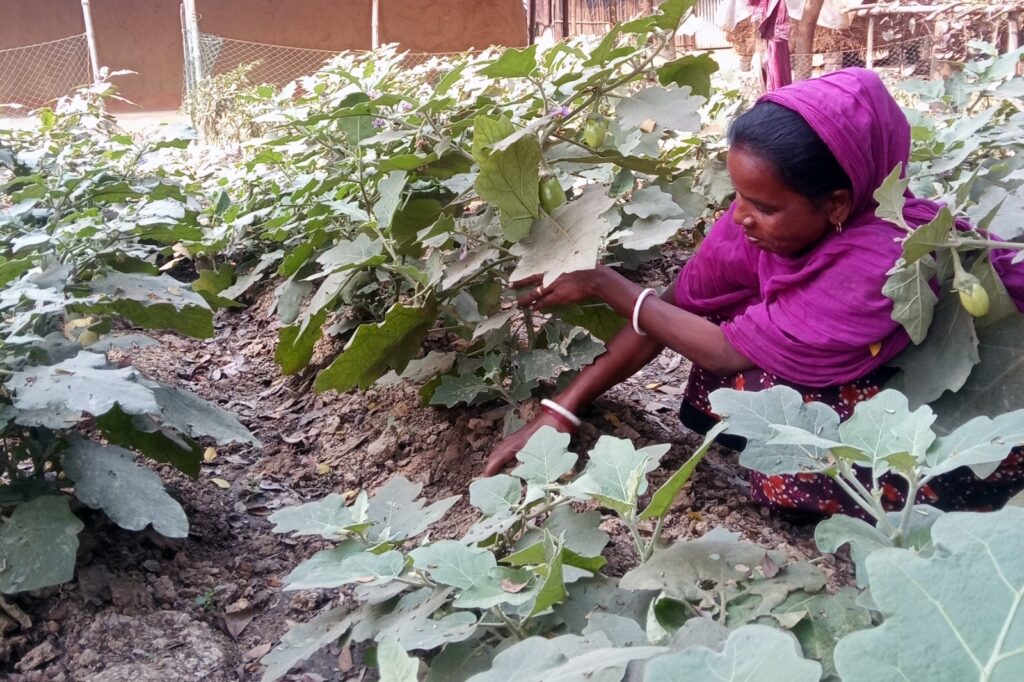
In 2025, Biswas took a decisive step to establish herself as an independent farmer. She invested her personal savings to lease a piece of land for three years under a sharecropping (‘barga’ in Bengali) arrangement. Sharecropping is a legal arrangement in which a landowner allows a tenant to use the land in return for a share of the crops produced on that land. Following the land lease, Olivia began cultivating both staple and diversified crops. She cultivated paddy and pulses on part of the land and vegetables such as chilli, cauliflower, bottle gourd, eggplant, cabbage, and other seasonal crops on the remaining area. By applying climate-resilient farming practices, she increased productivity and reduced crop losses associated with climate variability.
Alongside changes in production, Olivia also engages with markets. She established linkages with several local buyers who purchase vegetables directly from her field. While her husband supports transportation to nearby markets, Olivia maintains the buyer relationships herself, meaning she negotiates prices, and takes sales-related decisions. This way she does not depend on intermediaries and has greater control over market participation.
As a result of these changes, Olivia has begun generating regular income from farming, meeting household food needs, and contributing more consistently to family expenses. The stability from improved production has strengthened her confidence and enabled longer-term livelihood planning. This decision marked a major transition from daily agricultural laborer to land-based farmer, a bold move with significant financial risks. Especially as a woman in rural Bangladesh within a context of deep-rooted inequality affecting Indigenous communities. She is enthusiastic and plans for the future: “My next goal is to increase production using climate-resilient and organic methods, connect with larger markets, and ensure a stable future for my family.”
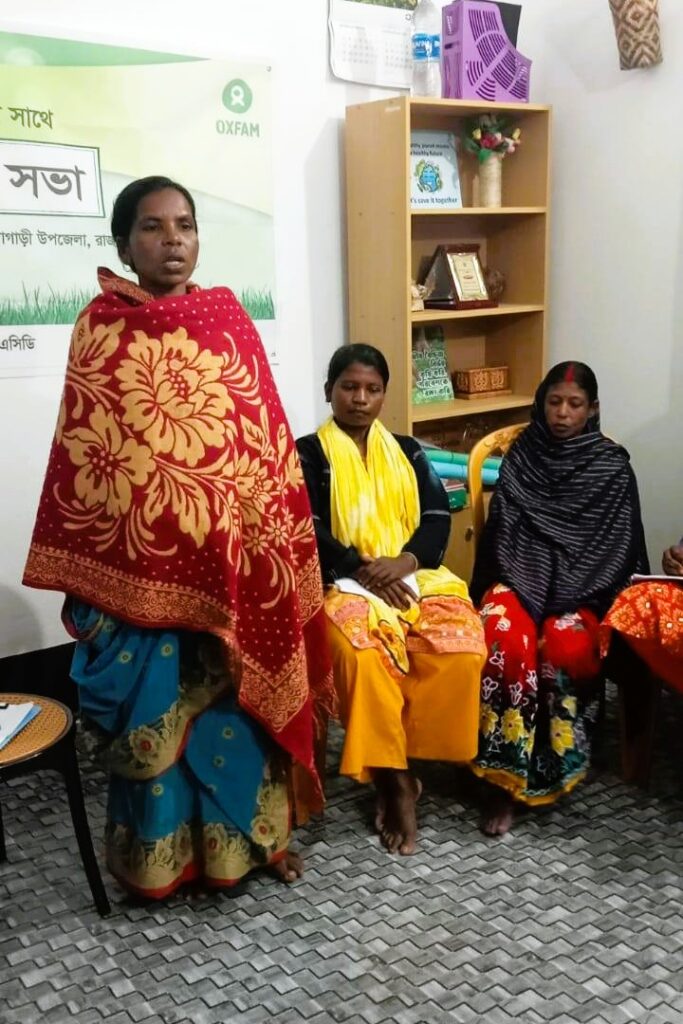
While broader system-level change requires longer-term engagement, this outcome represents a critical foundation for women’s participation in just, sustainable, and resilient food systems. Leveraging past experience with additional information, skills, sustained communication and trust can increase confidence that enables women to take economic decisions and initiate livelihood aspirations. Ensuring their household’s food availability and income security provides a stability on which it is possible to plan ahead. Olivia Biswas’s story demonstrates how capacity strengthening at the individual level can enable rural and Indigenous women to reposition themselves within their community and the local agricultural system. “I also want to support and inspire other women so that we can grow together and build a sustainable community”.