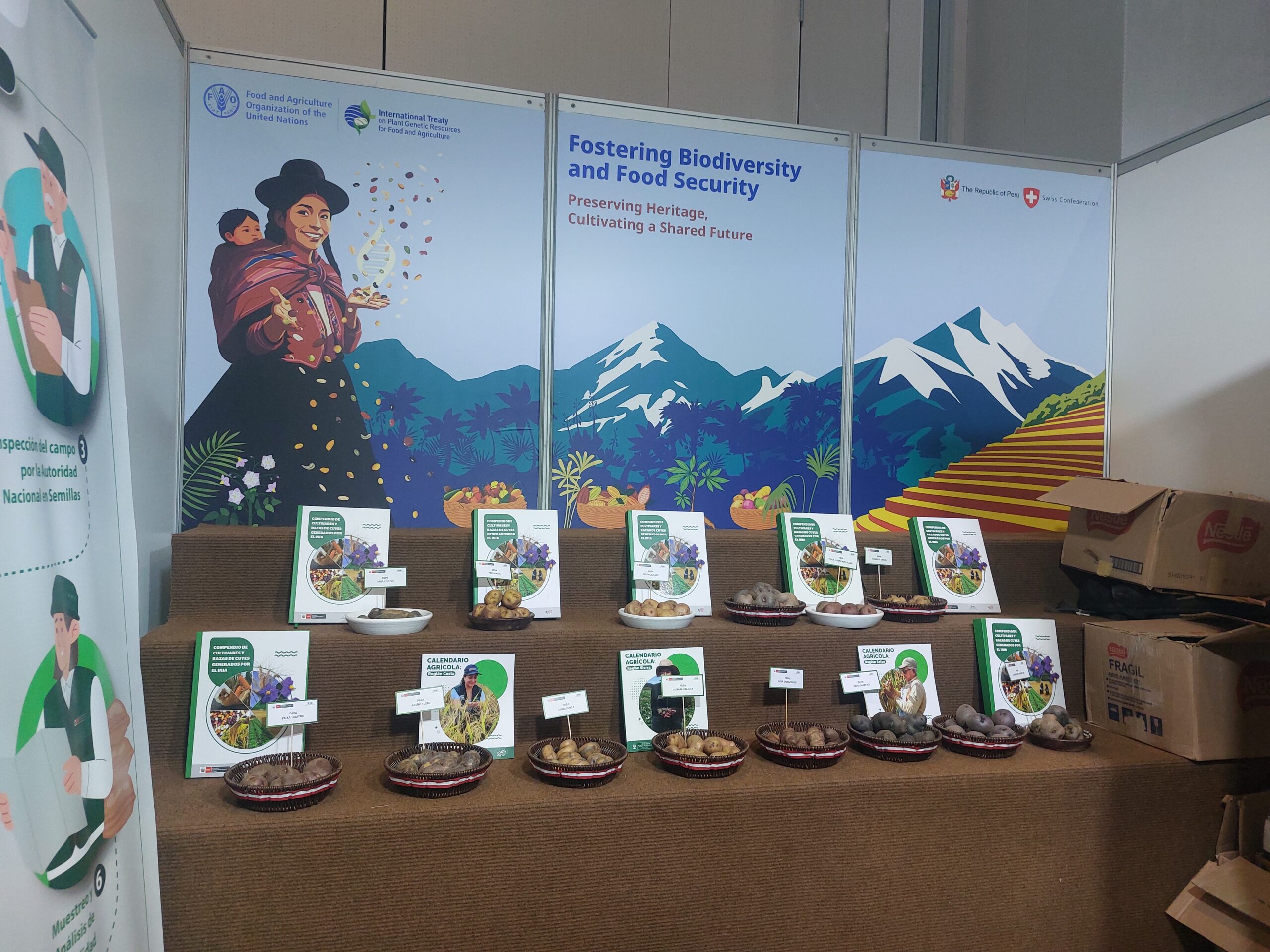
The meeting in Lima in the last week of November 2025 left many feelings of frustration and disappointment. The 11th Session of the Governing Body (GB11) of the International Treaty for Plant Genetic Resources for Food and Agriculture (ITPGRFA, the Treaty) concluded with no agreement reached over the three ‘hotspots’, (i) Digital Sequence Information/Genetic Sequence Data (DSI/GSD), (ii) the expansion of Annex I, and (iii) the payment structure and rates for the Multilateral System (MLS), despite these issues being a priority for countries to reach a fair, equitable, and functional access and benefit-sharing (ABS) mechanism under the Treaty.
What is the Treaty?
The FAO Plant Treaty is an international agreement broadly concerned with promoting the conservation and sustainable use of agricultural biodiversity (agrobiodiversity). Within this instrument are policies and legal measures that help to facilitate access to plant genetic resources, while also seeking to establish mechanisms to ensure the fair and equitable sharing of benefit that arise from access to these genetic resources, namely, the Multilateral System. It additionally includes important provisions on the realization of farmers’ rights and recognition of their role as stewards of agrobiodiversity.
Enhancement of the Multilateral System
A broad Global North-South divide was clearly visible across these three topics. Industrialised countries generally pushed for an expansion of Annex I to cover all plant genetic resources for food and agriculture (PGRFA), while developing countries emphasized the need for a functioning MLS system that is generating material benefits before any talk of expansion can be had, as well as for explicit inclusion of DSI/GSD in the Standard Transfer Material Agreement (SMTA). After the first contact group was held on the MLS, discussions were held behind closed doors in an attempt by Chair Alwin Kopše to avoid time over negotiating text and to find consensus over the key issues. However, little progress was made over the course of the week, with the result being a last-minute attempt at a proposal that Chair Kopše presented in plenary in the last hours of the Treaty meeting.
The proposal included expansion of the Annex beyond the current 64 crops that would be decided at the next GB meeting, due to be held in 2027 in Rome, and likely to be based on the 2023 FAO report ‘The plants that feed the world’. An Ad Hoc Technical Expert Group would be established for Annex I expansion. It would be decided to establish an Ad Hoc Advisory Group on measures integrating DSI/GSD into Treaty implementation mechanisms, while noting that benefit-sharing payments under the subscription option of the revised SMTA could be considered to address monetary benefit-sharing from the use of DSI/GSD on plant genetic resources for food and agriculture. It was proposed to adopt the revised SMTA while deciding the payment rates and threshold at the next GB in 2027.
Multiple countries from Africa, Asia, Latin America and the Caribbean, voiced their discontent with the proposed package, particularly with the payment structure and provisions on DSI in the SMTA, and similarly criticized for the lack of transparency in its drafting and limited time to assess its implications. Despite several hours of efforts to try to keep the proposal alive, no consensus was reached, and it was decided that deliberations will continue in two years’ time. Oxfam supports the proposal for some form of expansion of Annex I alongside a revision of the SMTA with a subscription system that requires upfront payment of 0.1% of all seed sales for companies with $10 million in seed sales annually.[1] See our full position here.
Farmers’ Rights
Many hours were spent convening the contact group on Farmers’ Rights, with the earnest efforts of co-chairs Kim van Seeters of the Netherlands and Modester Kachapila of Malawi to steer the negotiations into the direction of the text of the draft resolution. Disagreements primarily arose around the adoption of the Draft Strategy (2026 – 2029) which provides advice on how use of the ‘Options for encouraging, guiding and promoting the realization of Farmers’ Rights (the Options)’ can be promoted. In other words, suggestions on how to promote a set of options. Despite the inherent flexibility and freedom of choice surrounding the Options and the corresponding Strategy, they faced significant opposition from Japan, notably on Category 10: Legal measures for the implementation of Farmers’ Rights, such as legislative measures related to PGRFA. The underlying issue was the conflict that such an option could undermine national legislation surrounding plant breeders’ rights as outlined by the Convention of the Union for the Protection of New Varieties of Plants (UPOV), to which Japan is a party of and strong supporter. Details surrounding this debate and Oxfam’s position on farmers’ rights versus plant breeders’ rights can be found here.
Demands came from Japan to include text in the footnote to ensure that legal frameworks, measures, and actions in the strategy would not contradict the UPOV 1991 Act, while also requesting to have UPOV as an observer during the Ad Hoc Technical Expert Group on Farmers’ Rights Meetings. Opposition was raised from regions, notably from Latin America and the Caribbean, questioning the need for the explicit mention of UPOV, while civil society suggested the inclusion of other relevant international instruments such as the United Nations Declaration on the Rights of Peasants and Other People Working in Rural Areas (UNDROP). As a result, negotiations went in circles with Japan’s repeated reference to UPOV throughout the course of the draft resolution that mentioned the Drafty Strategy or the Options. With diligent work from the two co-chairs, a compromise was reached. The Draft Strategy was to be ‘taken note of’ rather than ‘Welcomed’, and the options under Category 10 noted as the Co-Chairs’ proposal. UPOV was not included in the draft resolution, but in the Terms of Reference (ToR) for the Ad Hoc Technical Expert Group on Farmers’ Rights (AHTEG-FR) it was established that two webinars on seed marketing/certification regulation and plant variety protection systems will be developed and carried out by the Treaty Secretariat.
Under a separate but highly relevant document, the Capacity Development Strategy and Draft Action Plan of the International Treaty, under IV, 4(c), civil society called for the enhanced coordination and cooperation on the successful implementation of the Treaty with UNDROP, and removing the reference to UPOV. The United Nation’s Working Group on Peasants and Rural Workers additionally called for alignment of the Treaty with UNDROP, alongside several other recommendations, which can be found in their policy brief here. These were unfortunately not taken up by delegates in this year’s meeting of the GB.
General News
The Community of Practice for FMSS: In collaboration with the McKnight Foundation, Oxfam held a side event during the Treaty meeting, ‘Exploring policies to promote and strengthen farmer-managed seed systems’, featuring four different policy approaches from countries and region across the globe. The policy recommendations from the November 2024 Harare workshop were also presented, which were published by the FAO in the information document ‘How to promote an enabling environment for Farmers’ Seed Systems?’ in October this year.
Kenya’s High Court rules in favor of farmer-managed seeds: Positive news came during the week’s meeting in Lima as the Kenyan High Court, on the 27th of November 2025, declared the Seed and Plant Varieties Act unconstitutional. Filed in 2022 by fifteen smallholder farmers, the claimants challenged the existing law containing provisions that criminalized farmers’ rights to save, share, and exchange seed. See an article on the case here.
Potential violations of the SMTA notified to the Treaty: On the 17th of November 2025, civil society organization Pro Specie Rara wrote to the Treaty Secretariat to initiate dispute settlement procedures pertaining to four cases of potential breaches of the SMTA through the use of patents claiming a native trait arising from material/gene sequences accessed through the Multilateral System. Oxfam acted as co-signatory to the letter, which can be viewed here. Given the lack of any user-based monetary benefits that have arisen from over a decade of use of the MLS and hundreds of thousands of accessions, it is of paramount importance that this process can elucidate how the existing SMTA of the MLS functions in practice and thereby aid in its improvement. We await further developments.
[1] A breakdown of the scenarios under different payment structures from the Ad Hoc Open-Ended Working Group to Enhance the Functioning of the MLS can be found using this link.